
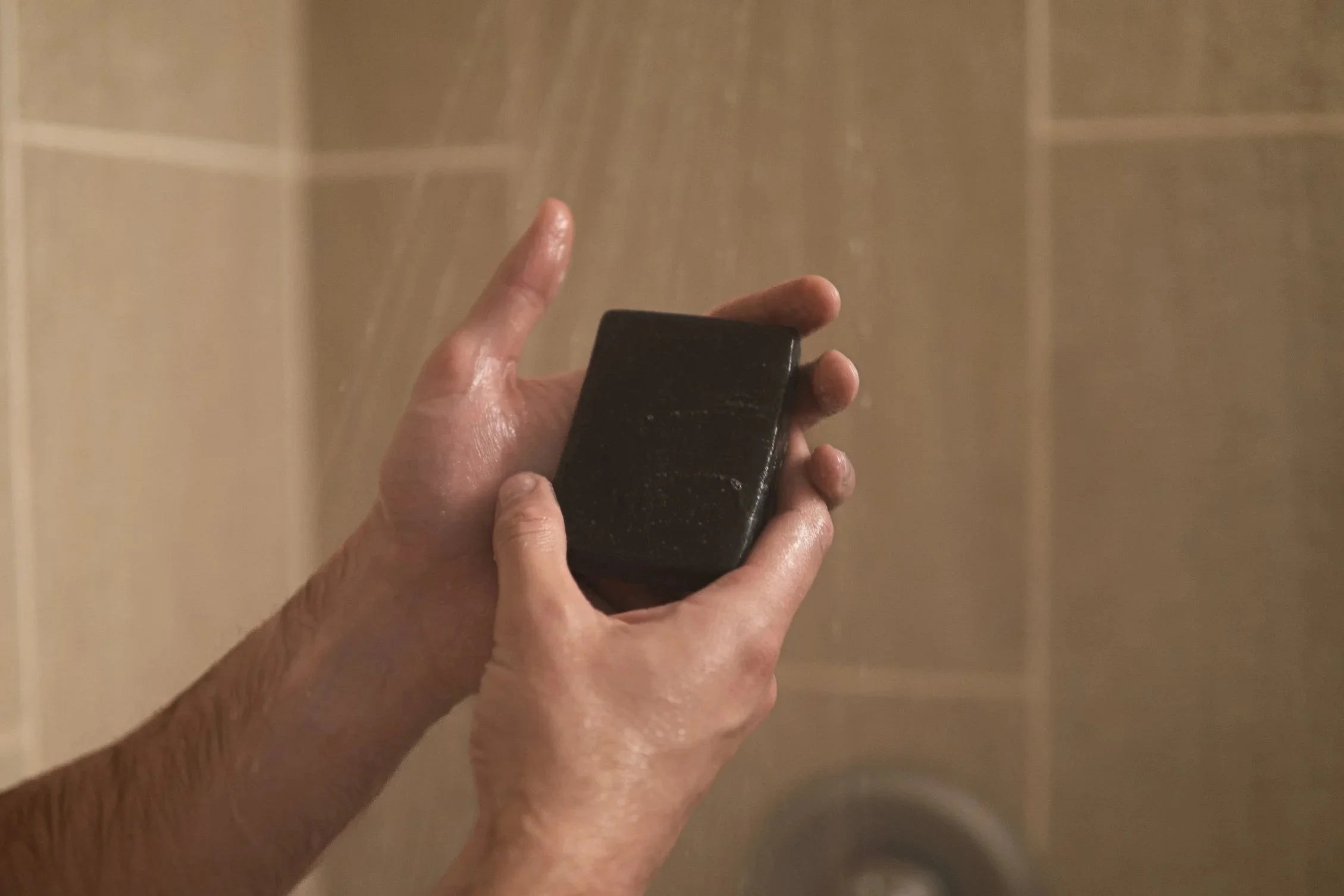
Why Your Best Ideas Happen in the Shower (It’s Not What You Think)
The shower has been stealing credit from you for years.
You've had the experience — the answer arriving while you're rinsing shampoo out, the solution to a problem you'd been turning over for days appearing fully formed before you've even reached for the towel. You probably called it a coincidence, or luck, or just what happens when you stop trying so hard.
It isn't coincidence. It's neuroscience. And understanding it changes how you think about those eight minutes.
The Network That Runs When You Aren't Looking
Cognitive scientists have a name for what's happening in your brain during the shower: default mode network activation.
The DMN is a set of interconnected brain regions — the medial prefrontal cortex, the posterior cingulate, the hippocampus — that activate when the mind is not engaged in directed, externally-focused tasks. When you're writing a proposal, navigating a difficult conversation, or tracking a spreadsheet, your DMN is largely suppressed. Your brain is running its executive network: sequential, analytical, locked onto the task in front of it.
This is the right tool for a lot of work. It is not the tool for insight.
When the executive network quiets and the default mode network takes over, the brain shifts into a different mode of processing — associative rather than sequential, wide rather than focused, connecting things that aren't supposed to go together. Autobiographical memory integrates with present problems. Background patterns surface. Things that couldn't be forced into relationship by analytical thinking suddenly find each other.
The DMN is reliably activated by three conditions, documented consistently in the literature: sleep, meditation, and mild physical tasks that don't require conscious direction. Walking. Driving a familiar route. Showering.
Why the Shower Specifically
Walking also activates the DMN. So does the commute, for some people, and certain kinds of low-demand exercise. But the shower has something those contexts don't: it is almost perfectly constructed to remove every competing input.
The warm water calms the sympathetic nervous system — the system responsible for the activation state that keeps your executive brain in charge. The solitude removes social monitoring, the constant background process your brain runs to track how others are perceiving you (which, it turns out, consumes significant cognitive resources even when you're not consciously aware of it). The ambient sound blocks external signal. The environment is familiar enough to require no navigation.
The shower, in other words, is an accidental sensory deprivation chamber. It removes the inputs that keep the task-focused network running, which lets the default mode network take the wheel.
This is why Einstein worked through his physics problems in the bath. Why Darwin built a "thinking path" — a gravel loop behind Down House specifically for pacing through problems he couldn't crack at his desk. Why Archimedes stepped into the tub and came up with the principle of buoyancy. Physical movement, including the non-locomotion of a warm shower, consistently produces the conditions for generative, associative, creative thought that the desk cannot.
The desk is for executing. The shower is for discovering.
What You're Doing When You're in There
The wandering that happens in the shower — the half-formed thought that turns out to be fully formed once it lands — isn't passive. It isn't the brain resting. It's the brain doing a specific kind of work that it cannot do under directed conditions.
Research on insight problems is useful here. An insight problem is one that can't be solved by incremental, step-by-step analysis — it requires a sudden restructuring of how you're seeing the situation. Studies show that people solving insight problems show a burst of high-frequency neural activity in the right hemisphere immediately before the solution arrives, often preceded by a moment of inattention — the mind literally looking away from the problem before the answer surfaces.
You can't force this. You can create the conditions for it.
The shower is one of the most reliable contexts for those conditions that most people encounter every day.
The Eight Minutes
The average shower is about eight minutes. That is not a long time.
It is, however, probably the only eight unstructured, uninterrupted, agenda-free minutes most driven people have in their day. The morning shower happens before the email opens. Before the calendar claims you. Before the day has asked anything of you yet. The mind is at its most generative — rested, not yet caught in the web of the day's demands — and it has a room to itself.
What you fill that room with matters.
Most people fill it accidentally — the previous day's leftover problems, the day's anticipated problems, or nothing in particular. The shower is something to get through. The cognitive potential of those eight minutes goes largely unrealized.
The rest of wellness culture has noticed this and responded with ritual: shower meditations, intention-setting, breathwork protocols. This overcorrects. The shower doesn't need more structure. It's valuable precisely because it has none. What it needs is not a practice. It needs better company.
Reclaim Wellness makes handmade soap for the one space in your day that belongs entirely to you. The five-bar line — CALM, CLARITY, VICTORY, SERENITY, and MINDFUL — was developed through years of sustained attention to what makes a scent feel true. Because the room where your mind does its best work deserves something that tried.